Save Time, Stress & Energy – Airport & Airplane Secrets Frequent Flyers Use
Gate strategy, food timing, jetlag control, air pressure hacks frequent flyers use but rarely explain.
Flying is not difficult—flying well is.
Most passengers treat airports like mild chaos: rushing, reacting, hoping for comfort instead of engineering it.
Meanwhile, frequent flyers move differently.
They walk with intention.
They anticipate instead of respond.
They know invisible rules—rules nobody teaches but everyone benefits from mastering.
This guide reveals that etiquette, psychology, and tactical behaviour that frequent flyers almost unconsciously use.
If you ever watched someone glide through airports and wondered, How are they so calm? — this is the explanation.
Because flying well doesn’t require status, luxury, or luck—
It requires strategy.
Let’s begin.
⭐ BEFORE YOU FLY: THE MINDSET SHIFT
Good travel begins before you lock your door.
Most people think flying is logistics:
• packing,
• leaving the house,
• checking in,
• boarding the plane.
But seasoned travelers treat flying like an energetic event.
Your psychological state is a passport.
If you start rushed, you will carry disorder into every stage.

Here’s what frequent flyers do the night before—but never brag about:
✔ They sleep on time
Not because they are good people but because they understand that micro-fatigue amplifies airport stress, shortens patience, and slows decision-making.
✔ They lay out their travel clothes
Decision elimination is a travel superpower.
✔ They fill their water bottle
Hydration is not a mid-flight activity—
It is a pre-flight ritual.
✔ They pack to access, not store
They don’t bury headphones, chargers, or documents deep in bags.
They pack like surgeons—what matters must be instantly reachable.
⭐ THE AIRPORT ARRIVAL STRATEGY
You’ve heard “arrive 2 hours early,”
but frequent flyers arrive calmly early—
there’s a difference.
Arriving too late = panic.
Arriving too early and drifting aimlessly also = panic state eventually.
What they do instead:
✔ They arrive early enough to never rush
because rushing turns the airport into a threat landscape.
Most people don’t realize this:
Stress shrinks situational awareness.
✔ They observe the airport layout
Entry flow, security lines, chokepoints.
They move like they’re conducting a quiet reconnaissance.
✔ They choose security lanes intentionally
Most first-timers stand wherever the queue begins.
Frequent flyers scan the crowd:
Avoid families, avoid stag groups, avoid tourists with scatter energy.
Go where:
• solo travelers,
• business travelers,
• airport staff are lining up.
Not because you are superior—
but because your time is.
⭐ THE SECURITY PSYCHOLOGY NOBODY TEACHES
You can tell who flies often by watching one thing:
their tray behaviour.
Professionals don’t unpack randomly.
They prep while walking:
• passport out,
• laptop accessible,
• jacket off before the bin.
This reduces:
• cognitive load
• delay stress
• passive embarrassment
You don’t need airport status.
You need pre-tasking.
⭐ THE GATE POSITIONING PARADOX
Most passengers sit right at the gate—
it feels intuitive.
But it is a rookie mistake.
Why?
• crowding
• noise
• stress contagion
• adrenaline spikes
• constant announcements
The best flyers sit
within clear sight of boarding but 10–20 steps away.
Not too close.
Not too far.
Just enough distance to observe without absorbing chaos.
This is how they preserve mental space.
⭐ THE “GATE AS THEATRE” AWARENESS
Another trick no one tells you:
Don’t stare at the boarding line.
It trains your brain into scarcity mode.
Instead,
• look sideways,
• read,
• journal,
• or simply sit with your back to the gate.
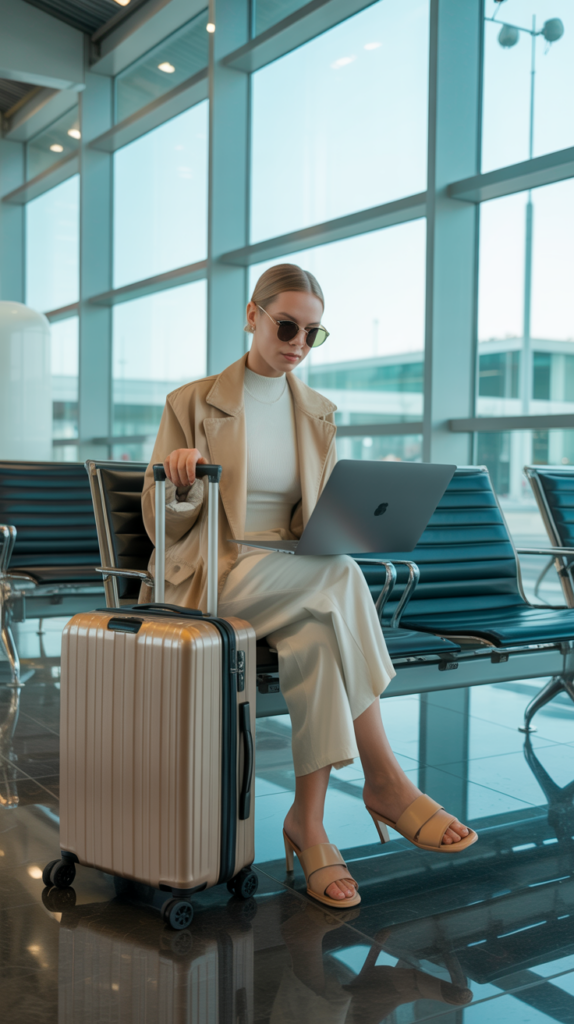
You will hear the call—
but you won’t absorb the collective panic.
Stress is contagious—
you must choose not to breathe it in.
⭐ BOARDING INTELLIGENCE
There are three types of boarding errors:
- boarding too early
- boarding too late
- boarding emotionally
Frequent flyers do none of these.
✔ They board when the cabin queue thins, not when it begins
Good boarding isn’t about being first—
It’s about being smooth.
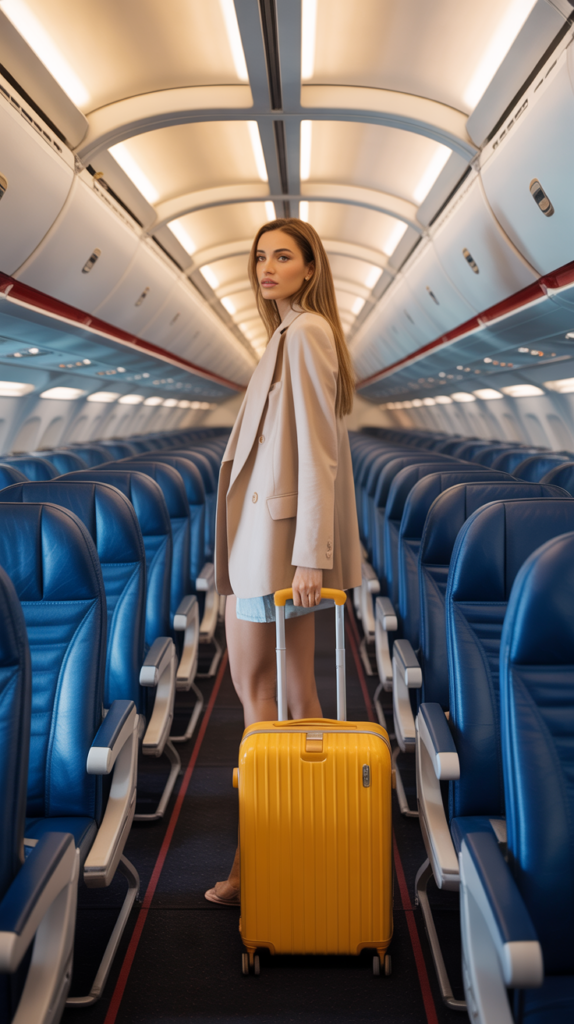
✔ They step on the plane with self-possession
Look at seasoned travelers:
They don’t scan for approval or panic about seat numbers.
They act like they belong—
because airport authority is performative:
you get treated how you look like you expect to be treated.
✔ They place luggage efficiently
Overhead space is social chess.
Rules seasoned travelers live by:
• place bags vertically or wheels-in,
• move quickly,
• help others without waiting to be asked.
It signals competence—
and competence receives cooperation.
⭐ FOOD & HYDRATION TIMING: THE SECRET YOU NEVER HEAR ABOUT
Most people eat on airplanes at the wrong time.
Frequent flyers know:
Food at altitude digests differently.
Your body slows, bloats, and swells.
So the first golden rule:
✔ Don’t eat during the first hour
Let your system acclimate.
✔ Eat before you intend to sleep
Your circadian rhythm processes food as data.
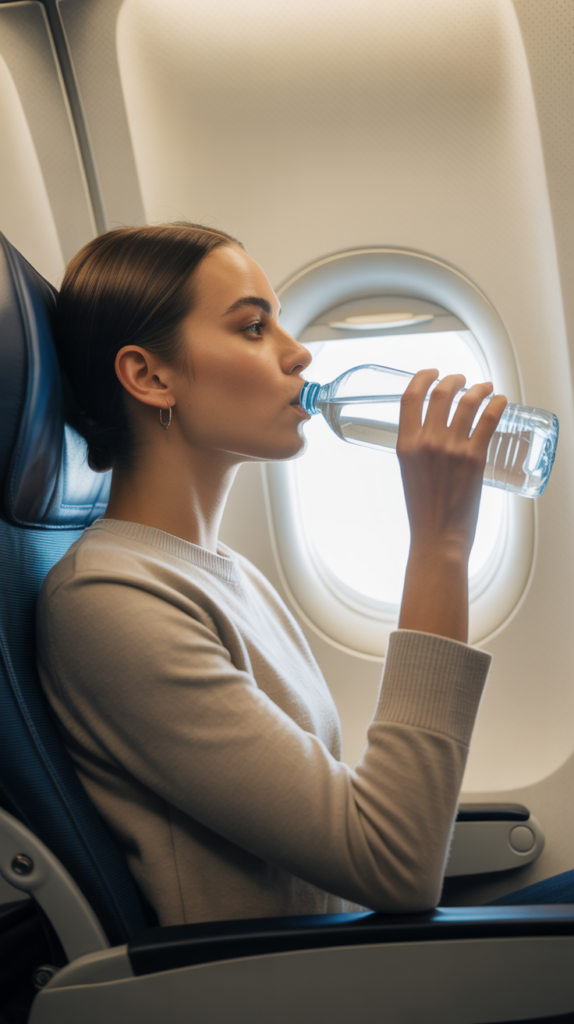
✔ Drink early, not constantly
Hydrate pre-flight
so mid-flight you can sip instead of chug.
✔ The salt paradox
Airlines add sodium to improve cabin taste—but
this adds swelling and dehydration.
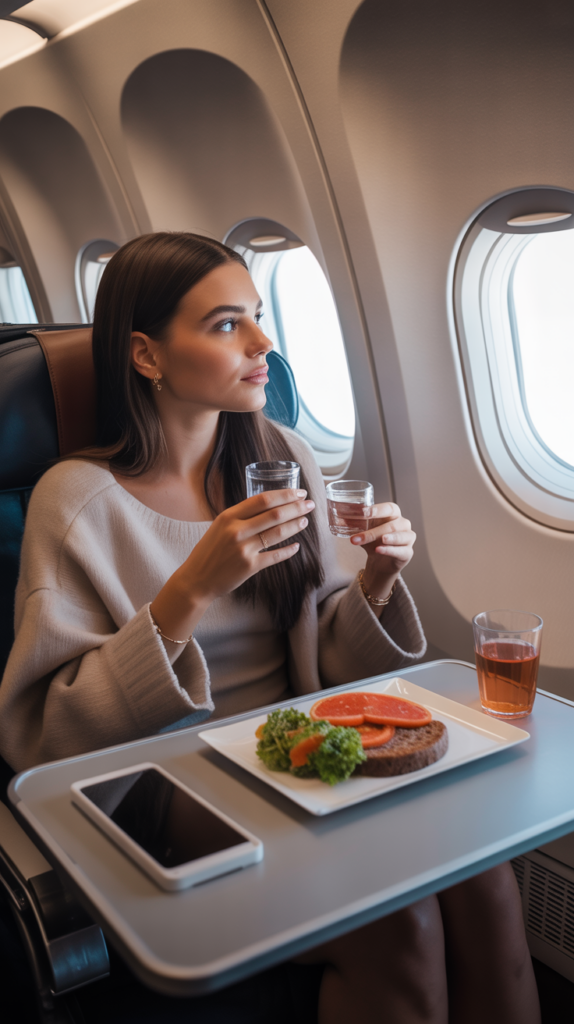
Frequent flyers snack smart:
• fruit
• nuts
• protein bars
• dark chocolate
• herbal drops
Luxury is energy, not indulgence.
THE COMFORT & CONTROL PHASE
The plane has taken off.
Now comes the stage most passengers endure—
but seasoned travelers engineer.
This section reveals the invisible skills they use
to protect the body, regulate energy, prevent jetlag,
and maintain presence.
Because flying shouldn’t feel like survival.
It should feel like movement with dignity.
⭐ THE AIR PRESSURE REALITY NO ONE EXPLAINS
At 36,000 feet, your body is negotiating:
• lower oxygen,
• higher pressure,
• reduced circulation,
• slowed digestion,
• sensory dryness.
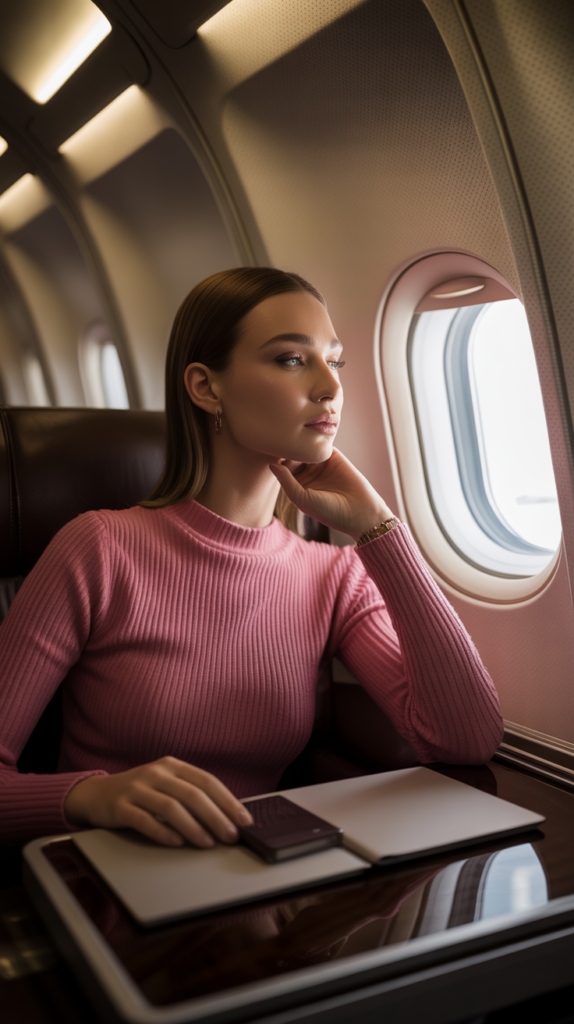
Most people interpret this as:
“Planes are uncomfortable.”
Frequent flyers interpret it as:
“My body needs assistance.”
✔ The Three-Zone Intervention Rule
- Jaw release
Air pressure tightens face and shoulders.
Soft jaw = soft nervous system.
Clench–release 5 times.
Instant regulation. - Foot flexing
Not just circling ankles—
push heels down, lift toes,
then switch.
This signals blood to return upward. - Upper back opening
Hold seatbelt low,
lean forward slightly,
slide shoulders back and down.
This is micro-posture therapy.
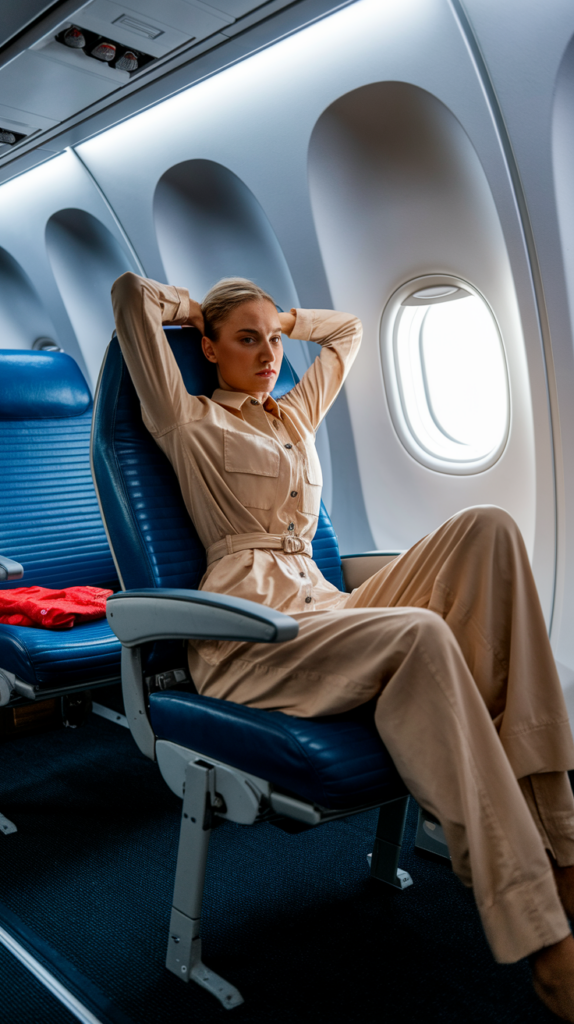
These invisible movements
prevent headaches, swelling, fatigue, and anxiety spikes.
⭐ THE CHEWING GUM MYTH & WHAT ACTUALLY WORKS
Chewing gum helps ear pops?
Partially.
Frequent flyers use a better trick:
✔ swallow salivation intentionally
Not sip, not chew—
swallow pressure.
Do this during takeoff / landing cycles
and you assist ear clearance
without overworking the jaw.
This is how people fly
without post-landing ear fatigue.
⭐ THE SEAT COMFORT INTELLIGENCE FREQUENT FLYERS NEVER TALK ABOUT
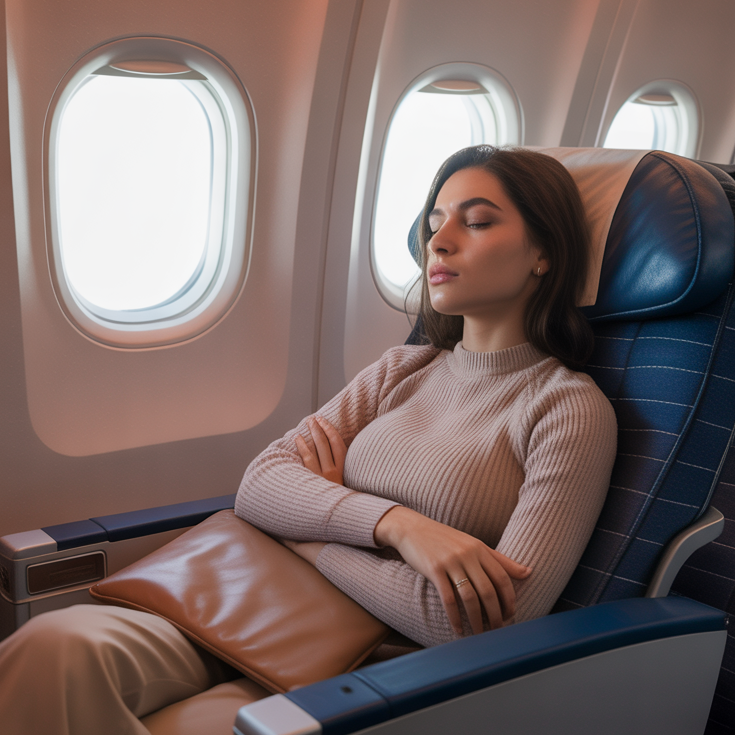
🔹 The Lumbar Rule
Airline seats are designed for cleaning, not comfort.
Add lumbar support immediately—
not after discomfort begins.
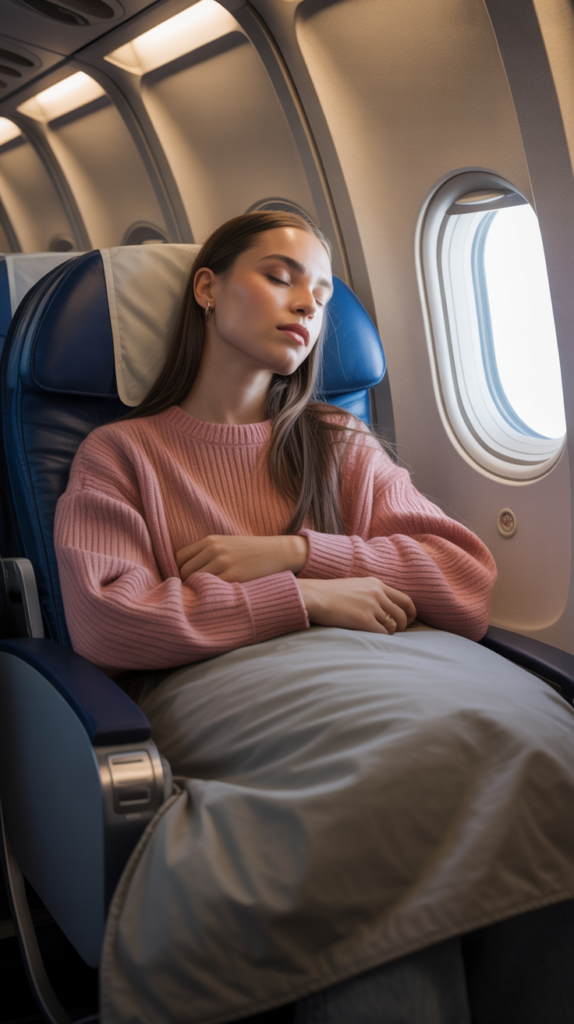
Use:
• scarf
• rolled sweater
• pillow
• jacket
Good travelers adjust their seats
like they adjust their mindset—
early, not late.
🔹 The Tray Trick
Crack the tray table open slightly
and rest elbows lightly—
this straightens the upper spine
without looking obvious.
Posture = oxygen = clarity.
🔹 Seat Pocket Detox
Most people view the seat pocket
as storage.
Frequent flyers view it as contamination.
Use it minimally.
Only store:
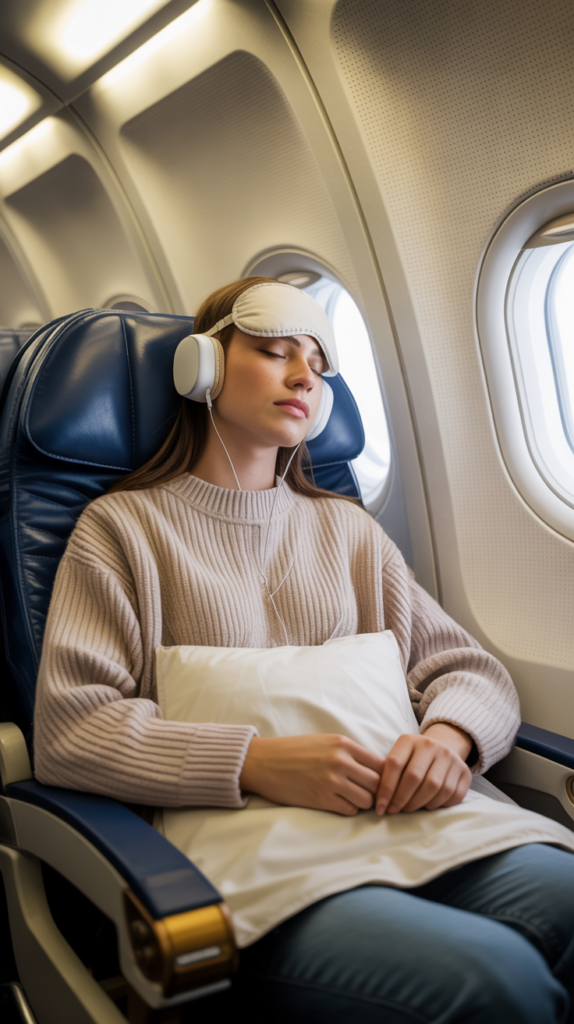
• phone,
• earphones,
• napkin,
• water.
Otherwise, treat it as a no-contact zone.
⭐ THE LONG FLIGHT ENERGY STRATEGY
Jetlag is not a mystery;
it’s mismanaged time.
What seasoned flyers do differently:
✔ They sync time zone before landing
Reset watch mid-flight.
Eat, sleep, and drink based on destination time, not origin.
Your brain follows your behaviour, not your ticket.
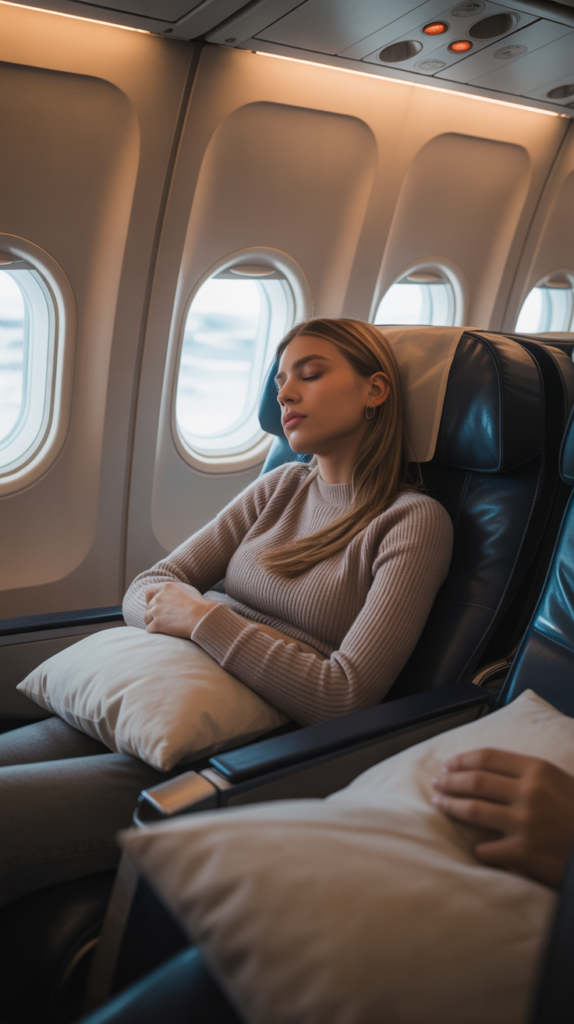
✔ The 90-minute Nap Law
Nap in 90-minute cycles
or avoid sleeping entirely.
Why?
Your circadian rhythm resets in 90-minute segments.
Break this and you land exhausted
even after “sleeping.”
✔ Strategic Light Exposure
After landing, seek daylight
within the first 90 minutes.
This is the single fastest jetlag regulator.
⭐ THE POST-LANDING PHASE NOBODY EVER TEACHES
Passengers treat landing
as a race to escape the plane.
Frequent flyers treat landing
as the start of the real performance.
✦ Don’t rush off
Crowding spikes cortisol
and instantly exhausts you.
Pause.
Stand only when your row clears.
Grace under pressure
is energy conservation.
✦ Walk slowly through the corridor
Airport halls are psychological decompressing spaces.
Let rhythm return gradually.
✦ The Baggage Carousel Strategy
Stand either:
• at the beginning of belt movement
or
• just past the first turn
This is where bags surface fastest.
Everyone crowds the middle
and ends up waiting longer.
⭐ THE QUIET LUXURY TRAVEL RITUAL
Truly skilled travelers don’t scream competence—
they embody it.
Their travel style includes:
✔ Calm posture
You don’t push through crowds
—you glide through spaces.
✔ A curated tote interior
Everything has position.
They don’t dig; they retrieve.
✔ Silence as power
They don’t narrate problems,
complain at check-in,
or comment on delays.
Silence creates dominance—
and dominance is respected.
Travel isn’t about miles—
it’s about behaviour at altitude.
These micro-habits
turn coach into quiet comfort,
delay into poise,
and fatigue into controlled presence.
You don’t need a first-class seat
to travel like someone who belongs there.
You only need to adopt
the behaviours of those who already do.
ARRIVAL ENERGY & THE ART OF LANDING WELL
Most people believe flying ends at landing.
Seasoned travelers know:
landing is the beginning of the next performance.
How you walk through arrivals sets:
• your mental state,
• your health outcome,
• your jetlag severity,
• and how the city receives you.
This section reveals the unspoken rituals frequent flyers follow after touchdown.
⭐ THE FIRST 5 MINUTES AFTER LANDING
Everyone stands too soon.
The plane halts
and 90% of passengers pop up—
performing a collective panic choreography:
• crouched backs
• elbows
• bags hitting heads
Seasoned travelers stay seated.
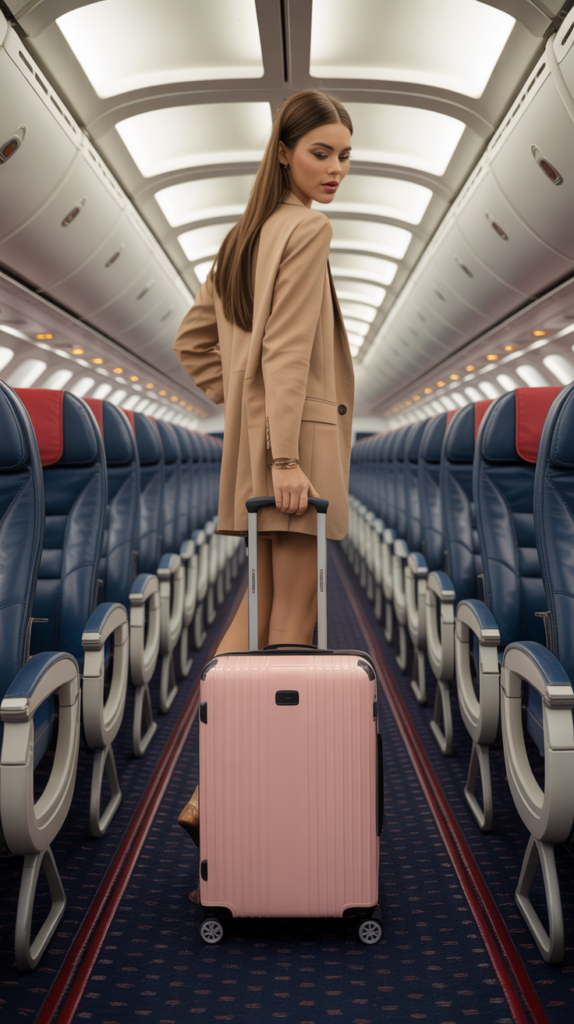
Not because they lack urgency—
but because they understand:
Control beats speed.
✔ Why they wait
• letting aisles clear
• protecting nervous system
• preventing awkward competition
Standing early gives:
stress, crowd compression, social friction.
Standing late gives:
clarity, space, grace.
⭐ THE BRIDGE OF TRANSITION (THE CORRIDOR)
The corridor between aircraft and terminal
is a liminal space—
your body knows you’re arriving
but hasn’t re-entered ground reality.
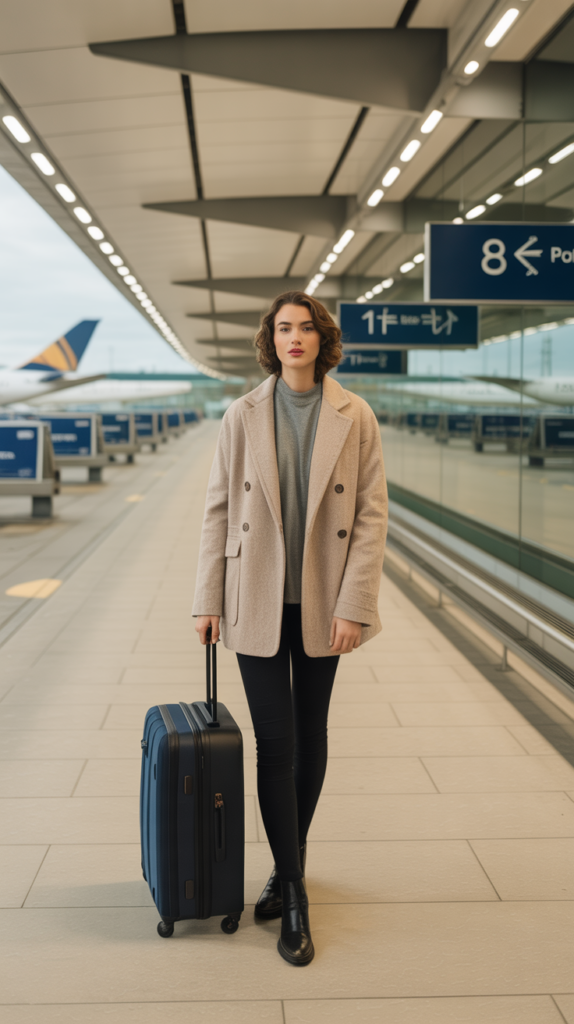
Treat it as a reset walkway:
• Walk slowly
• Deepen breathing
• Roll shoulders
• Observe new light
This is where mental jetlag begins—
or is prevented.
⭐ AIRPORT ARRIVAL NAVIGATION — THE RITUAL
Passengers exit aggressively or aimlessly.
Frequent flyers exit strategically.
✔ They scan flow
Is there immigration?
Are there self-service e-gates?
Where are bottlenecks forming?
They move like water—
going where resistance isn’t.
✔ They avoid clusters
Families, school groups, crew-change packs create turbulence.
Slide ahead—courteously.
✔ They never walk buried in phone
Presence is currency.
You will miss directional shifts and signs
if you move in internal dialogue.
As in airports,
life rewards those who observe.
⭐ THE BAGGAGE CLAIM GAME
Most people crowd the belt middle
where bags rarely appear.
Seasoned flyers position:
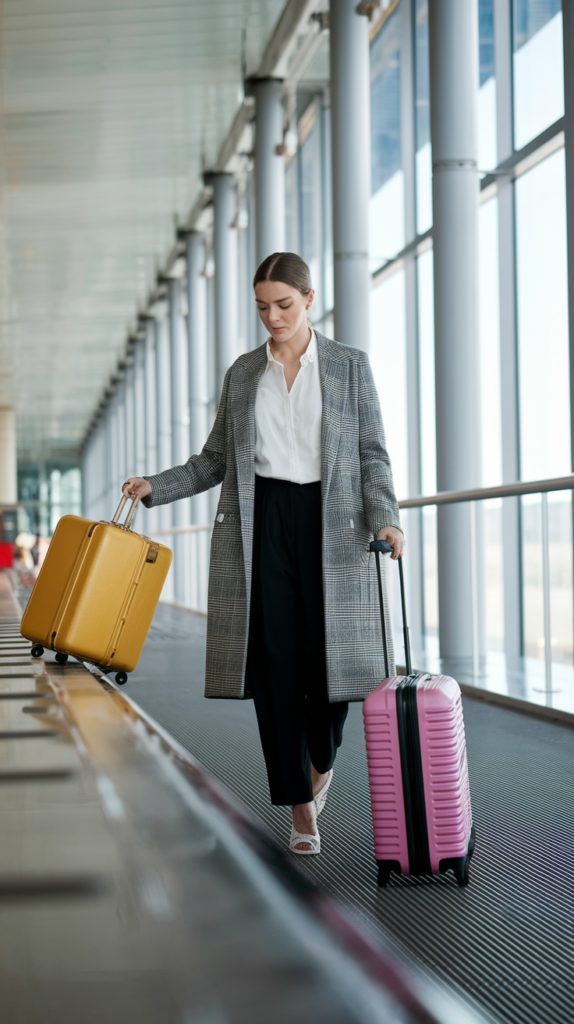
• where the belt starts
• or just after the first curve
Why?
That is where luggage rises from sight
and is easiest to pick up
without body-shuffle battles.
✔ Bonus hack
Extend one foot toward the belt,
not the hand.
Authority posture reduces others’ jostling instincts.
⭐ THE ARRIVAL BODY RESET
As wheels touch runway,
your system holds three tensions:
• posture freeze
• dehydration
• mild hypoxia
To reset:
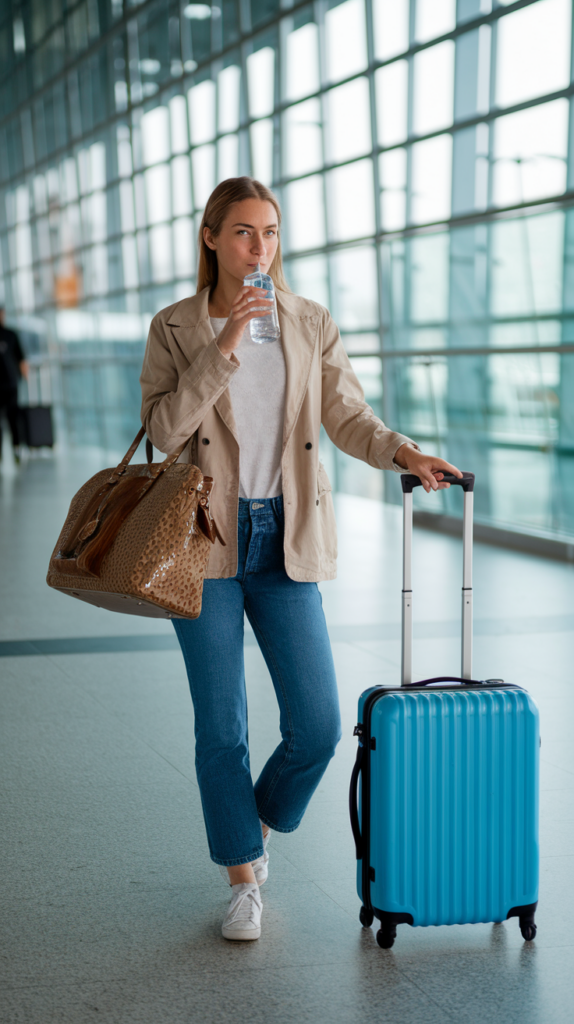
✔ Drink slowly within 10 minutes
But not too much—
the stomach is sensitive.
✔ Face daylight
Step near windows even before immigration.
✔ Move shoulders
Your nervous system processes “arrival” through posture, not thoughts.
This single ritual
shortens fatigue dramatically.
⭐ THE EMOTIONAL ARRIVAL
Nobody talks about travel as emotional transition—
but it is.
Airports are psychological bridges:
• you leave one identity
• you enter another
Seasoned travelers don’t rush this stage.
They:
✔ slow the walk
✔ breathe consciously
✔ scan the space softly
They arrive into themselves
before arriving into the city.
This makes travel feel effortless and stylish
—not frantic.
⭐ THE AIRPORT EXIT STRATEGY
Most people mentally shut down once bags are collected.
Elite travelers stay switched on:
• They look for the cleanest path
Staff walkways often become shortcuts.
• They avoid taxi chaos
If ride apps exist, they step aside, claim space, then summon.
• They walk past congestion before stopping
Momentum reduces overwhelm.
Traveling well is choreography—
don’t break your rhythm at the final step.
⭐ THE SIGNATURE AIRPORT AESTHETIC
Ever notice the travelers who look expensive—
even without luxury brands?
They follow a simple formula:
✔ smooth silhouette
✔ controlled movement
✔ curated carry-on
✔ light grooming
✔ neutral palette
✔ silence
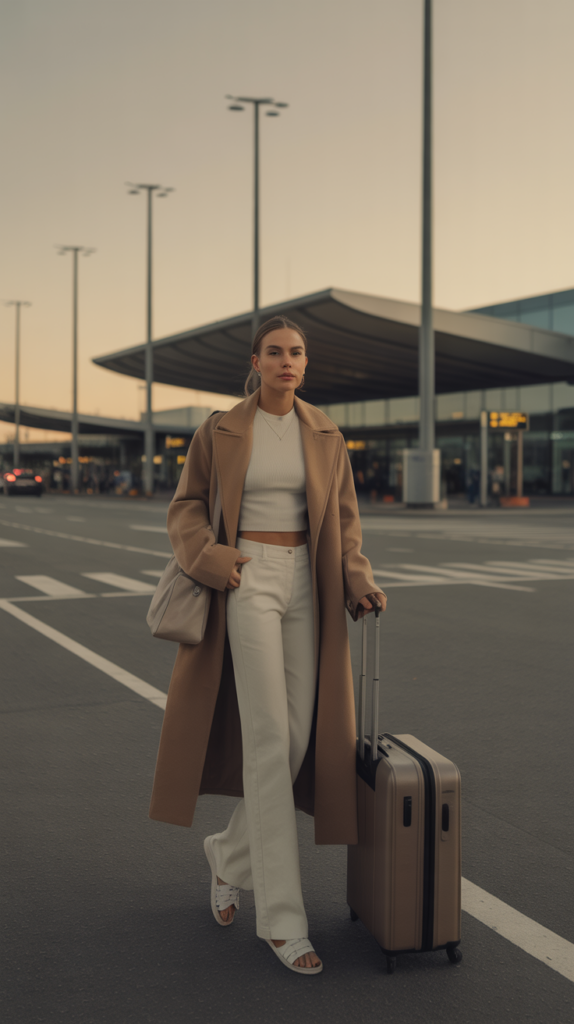
Luxury is not bags or logos—
it is the absence of visible depletion.
Many passengers arrive looking crushed.
Seasoned travelers arrive looking composed.
That is their aesthetic.
⭐ THE “I BELONG ANYWHERE” MOVEMENT CODE
This is the invisible skill frequent flyers carry.
It’s not appearance—
it’s behaviour.
They walk with:
• loose shoulders
• lifted sternum
• minimal noise
• no rush
• situational awareness
• kind-eyed confidence
This body language says:
“I know how to navigate new spaces.”
And airports, cities, and strangers
respond accordingly.
Travel changes how you are treated
because travel changes how you treat your own presence.
Landing isn’t arrival—
embodiment is arrival.
People think travel is transit—
but seasoned travelers know
it is a series of micro-performances
that shape your energy,
identity,
and experience.
Flying well is becoming well—
and how you step into a city
determines how it meets you.
TRAVEL AS IDENTITY: THE FINAL SHIFT
Flying is not movement from point A to B.
Flying is identity rehearsal:
• How you handle uncertainty
• How you regulate yourself
• How you interact under pressure
• How you hold presence among strangers
Frequent flyers are admired not because they travel—
but because they embody themselves while traveling.
Let’s decode the invisible rituals that make them look competent, calm, and expensive—
without money, status, or performance.
⭐ THE AURA RITUAL — WHAT SEASONED TRAVELERS DO THAT ROOKIES DON’T
They choose their state before entering public space.
Before immigration lines, baggage belts, and taxi chaos, they:
✔ soften the breath
✔ lift posture
✔ release jaw tension
✔ settle shoulders
✔ smooth facial expression
They enter spaces
as the solution, not as another problem.
This is why staff treat them better—
they read as low-maintenance and high-clarity.
Airports reward composure
more than tickets.
⭐ THE TRAVELER’S INTERNAL MONOLOGUE
Most passengers think:
“I hope this goes well.”
Frequent flyers think:
“I can handle whatever happens.”
Hope is passive.
Handling is power.
Travel isn’t calmness—
travel is controlled adaptation.
⭐ THE BEAUTY OF SILENCE
Crowded spaces tempt narration:
• “This line is so slow.”
• “Why is boarding delayed?”
• “Ugh, people.”
Frequent flyers don’t narrate discomfort.
They conserve emotional oxygen.
Silence is not absence.
Silence is possession.
People who conserve words
preserve authority.
⭐ THE RITUAL OF RE-ENTRY
Once you exit the airport,
your behaviour defines integration.
✔ Walk slower than your mind
✔ Breathe deeper than your irritation
✔ Spend less energy than the city demands
Travel doesn’t reward speed—
travel rewards presence.
⭐ THE TRAVELER YOU BECOME
After mastering these practices:
You are no longer “going somewhere.”
You are someone who
moves beautifully through the world.
Your behaviour becomes wealth-coded.
Your presence reads as self-respect.
Your flight stops being transportation
and becomes transformation.
You land not just in cities—
you land in yourself.
Flying well is one of the last modern luxuries
—and it costs nothing.
It is technique, not luck.
Awareness, not status.
Behaviour, not baggage.
Travel is the world’s greatest teacher
for people willing to stop surviving it
and start living inside it.
Once you learn to move with clarity under pressure
you stop being a passenger
and become a traveler.
✈️ FAQ — The Questions Nobody Really Asks Out Loud
Does traveling well require money or business class?
No.
Travel elegance is not purchased—
it is performed.
Most quiet luxury travellers sit in economy but behave like first class.
What’s one habit that instantly makes flights easier?
Slow down.
Move deliberately, not reactively.
Travel rewards the calm over the hurried.
How do seasoned travelers avoid stress at the gate?
They sit near the gate, not at it—
10 paces away with line-of-sight.
What prevents jetlag the fastest?
Light exposure in the first 90 minutes after arrival.
This resets your internal clock faster than supplements.
Is eating on planes bad?
Only at the wrong time.
Eat before you intend to sleep,
not when food is served.
Why do frequent flyers seem so confident?
Their posture, silence, and movement project self-possession—
and airports mirror the energy you radiate.
What’s the secret to looking “quiet luxury” while traveling?
Control.
Minimal noise.
Smooth posture.
Curated tote interior.
Soft grooming.
Presence is the true accessory.
How do I start flying better if I’ve always been chaotic?
Pick one habit from this guide:
• arrive calmly
• slow movement
• eat later
• reposition away from the gate
• reset watch mid-air
• decompress posture after landing
Master one ritual at a time—
the rest follow.