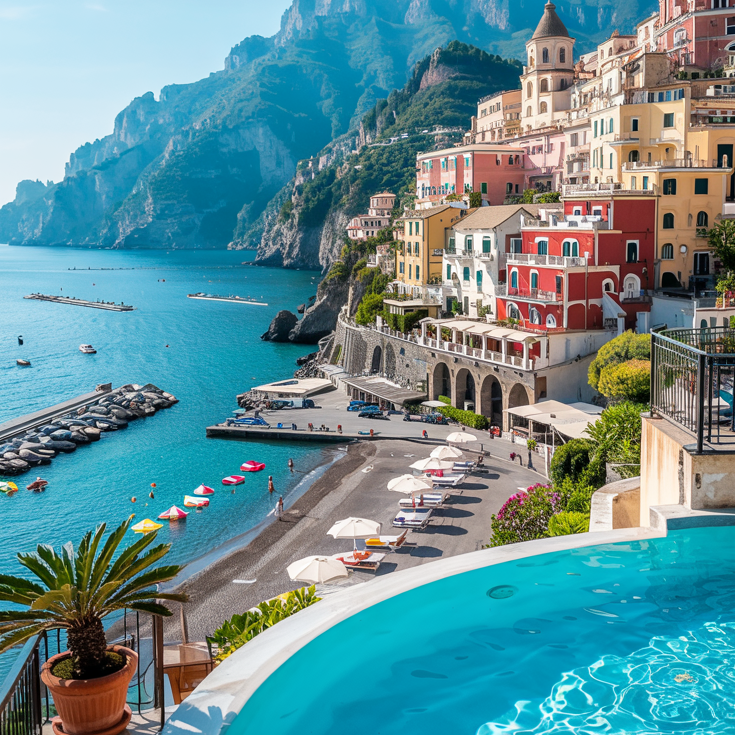
The South of France doesn’t announce itself all at once.
It reveals itself slowly.
First, it’s the light — softer than you expect, warmer than anywhere else.
Then it’s the colors — lavender fields stretching into the horizon, pastel villages clinging to cliffs, water so blue it almost feels unreal.
You think you’re prepared.
You’ve seen the photos.
You’ve saved the Pinterest boards.
You’ve heard the clichés.
And still — it surprises you.
Because the South of France isn’t just one destination.
It’s dozens of small worlds stitched together by winding roads, sun-bleached stone, and a way of life that feels unhurried in the best possible way.
One moment you’re standing in a medieval hilltop village where time seems frozen.
The next, you’re swimming below white limestone cliffs in water clearer than glass.
Later that same day, you’re sipping wine in a quiet square, wondering how places like this can exist outside of movies.
This guide was created for travelers who don’t want to rush.
For those who want beauty, yes — but also atmosphere.
For people who want to understand where to go, why to go, and how to connect the dots without feeling overwhelmed.
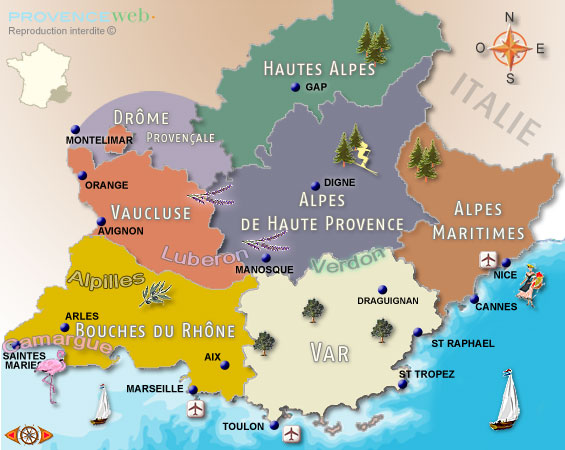
Inside, you’ll find 23 of the dreamiest places to visit in the South of France, from iconic Riviera towns to lesser-known villages, lavender fields, dramatic coastlines, and wild natural landscapes — all organized in a way that actually helps you plan.
And yes — there’s a map, too. Because dreams are better when they’re easy to follow.
How to Use This South of France Travel Guide
The South of France can feel overwhelming at first — not because there’s too little to see, but because there’s too much.
Do you focus on the coast or the countryside?
Lavender fields or historic cities?
Iconic destinations or hidden villages?
This guide is designed to help you make those decisions without stress, even if this is your first time visiting the region.
Rather than listing places randomly, the destinations are grouped by experience and geography. Coastal towns are together. Provençal villages are together. Nature-heavy destinations have their own section. This makes it easier to build an itinerary that flows naturally instead of zigzagging across the map.
You don’t need to visit all 23 places.
In fact, you shouldn’t.
The magic of the South of France reveals itself slowly — over long lunches, scenic drives, late sunsets, and unplanned stops in villages you didn’t know existed five minutes earlier. This guide helps you choose the right places for your travel style, whether that’s:
- A relaxed road trip
- A romantic getaway
- A photography-focused itinerary
- Or a first-time highlights tour
Each destination includes:
- Why it’s special
- What kind of traveler will love it most
- How it fits into a realistic route
Use this guide as a menu, not a checklist. Pick what excites you, skip what doesn’t, and leave room for spontaneity — that’s where the South of France truly shines.
📍 The Ultimate Map of the South of France
One of the biggest mistakes travelers make in the South of France is underestimating distances.
On a map, everything looks close.
In reality, winding mountain roads, coastal routes, and village detours can turn short distances into scenic (but time-consuming) journeys.
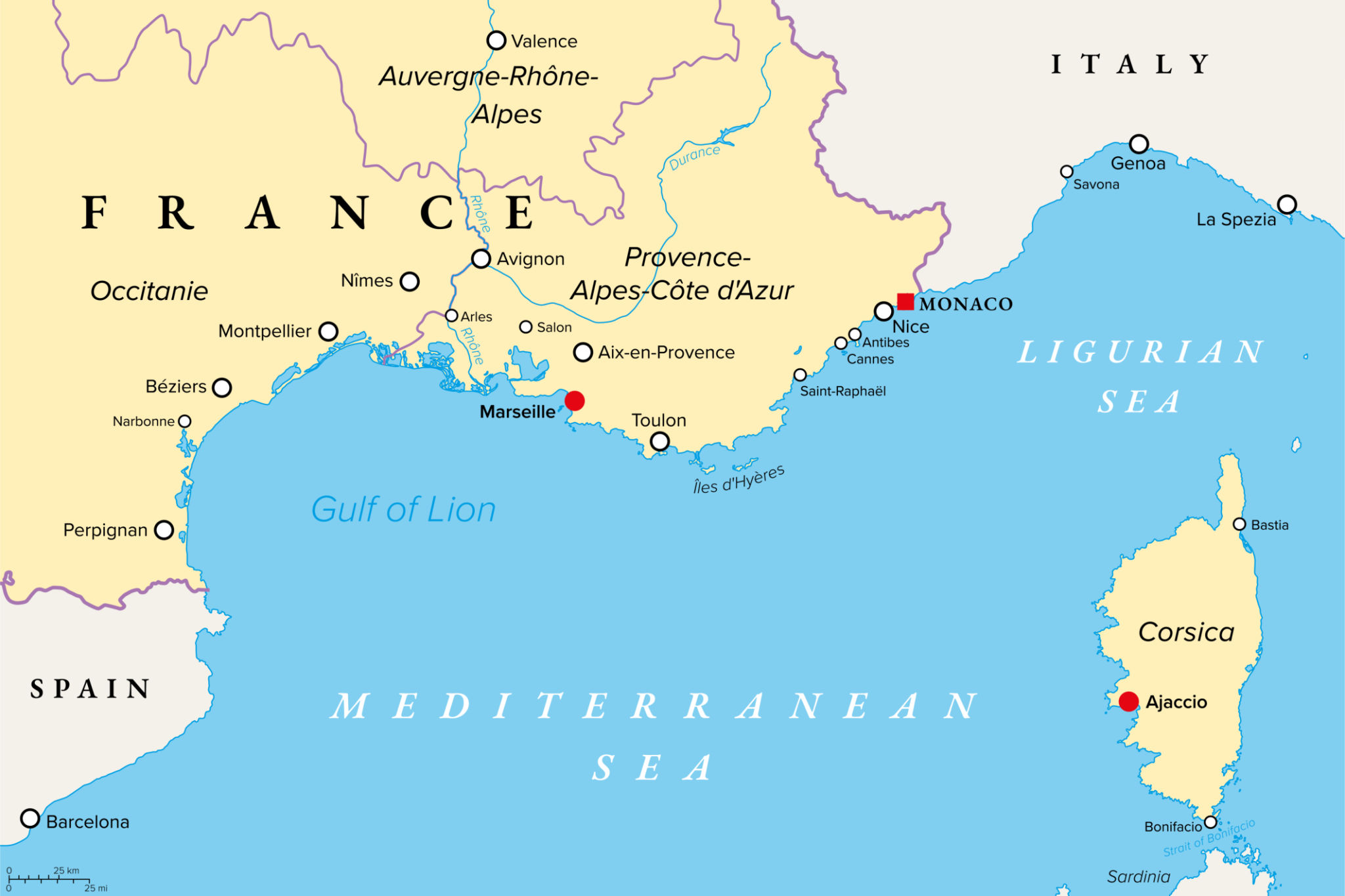
That’s why this guide includes a carefully organized map showing all 23 destinations — so you can instantly see which places make sense together.
How the Destinations Are Grouped
The locations are divided into four main regions:
- The French Riviera (Côte d’Azur)
Glamorous coastal towns, Mediterranean beaches, cliffside villages - Provence & the Luberon
Lavender fields, stone villages, vineyards, quiet countryside - Occitanie & Roman France
Ancient cities, amphitheaters, deep history - Natural Wonders & Wild Landscapes
Canyons, national parks, wetlands, dramatic coastlines
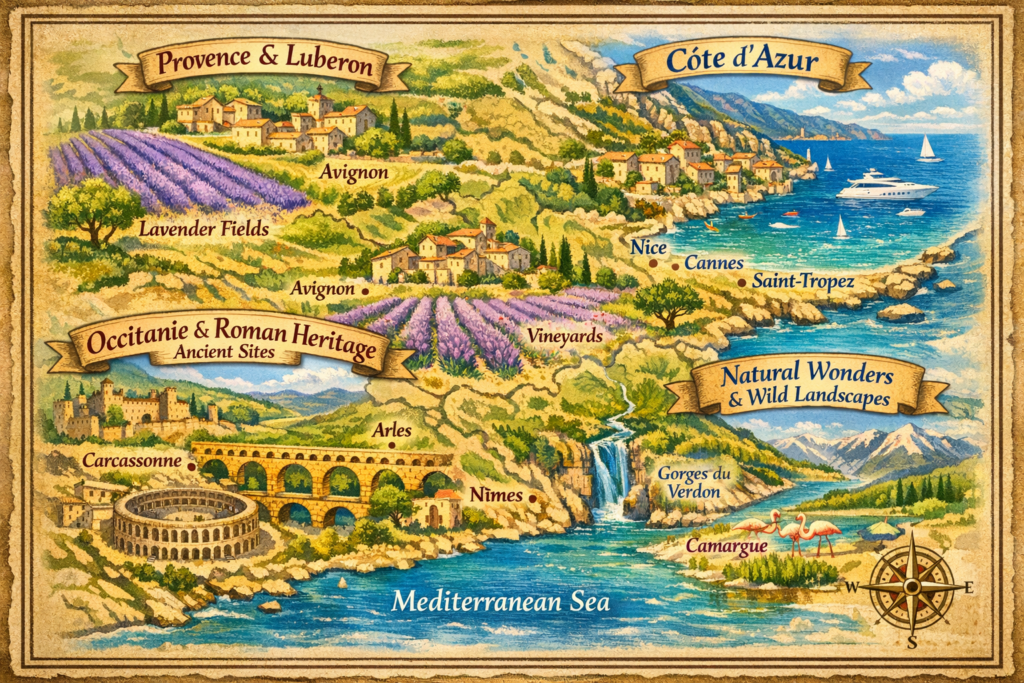
By grouping your stops within one or two regions, you’ll spend less time driving and more time enjoying.
Driving vs. Trains
- Car rental is highly recommended if you want to visit villages, lavender fields, or natural parks
- Trains work well for major cities and coastal hubs like Nice, Cannes, and Avignon
- A mixed approach (train + short car rental) often works best
How Much Time Do You Need?
- 7 days → Choose one region (Riviera or Provence)
- 10 days → Combine coast + countryside
- 14 days → Slow travel with nature stops and hidden villages
The map helps you visualize these combinations instantly — no guesswork required.
Dreamy Coastal Towns & Riviera Icons
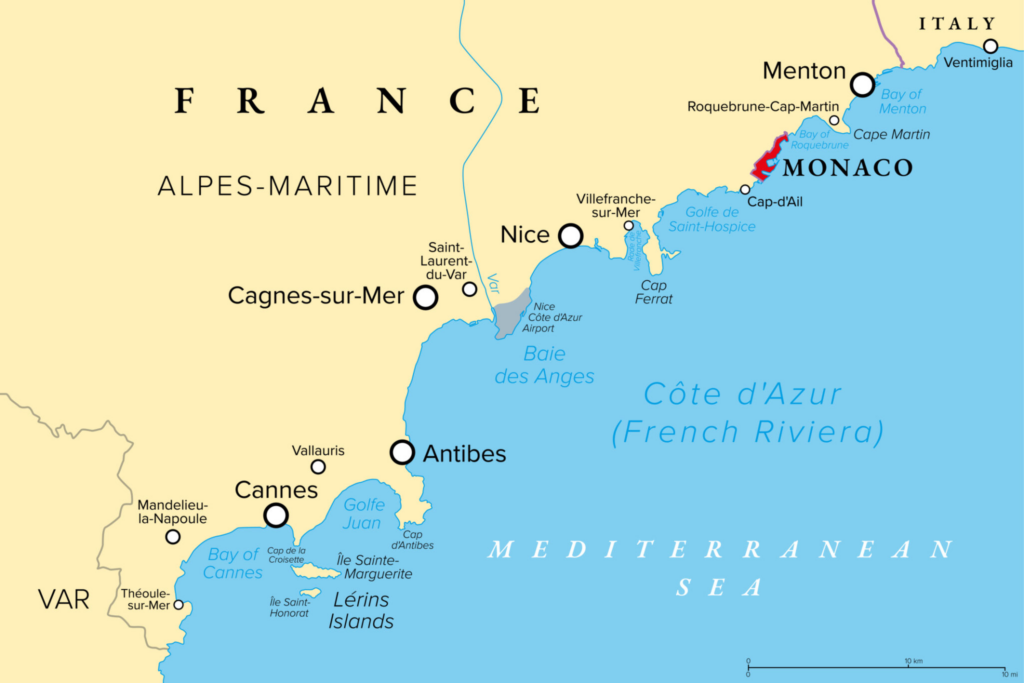
The French Riviera (Côte d’Azur)
The French Riviera is often imagined as glamorous, crowded, and impossibly expensive — and while that version exists, it’s only one layer of the story.
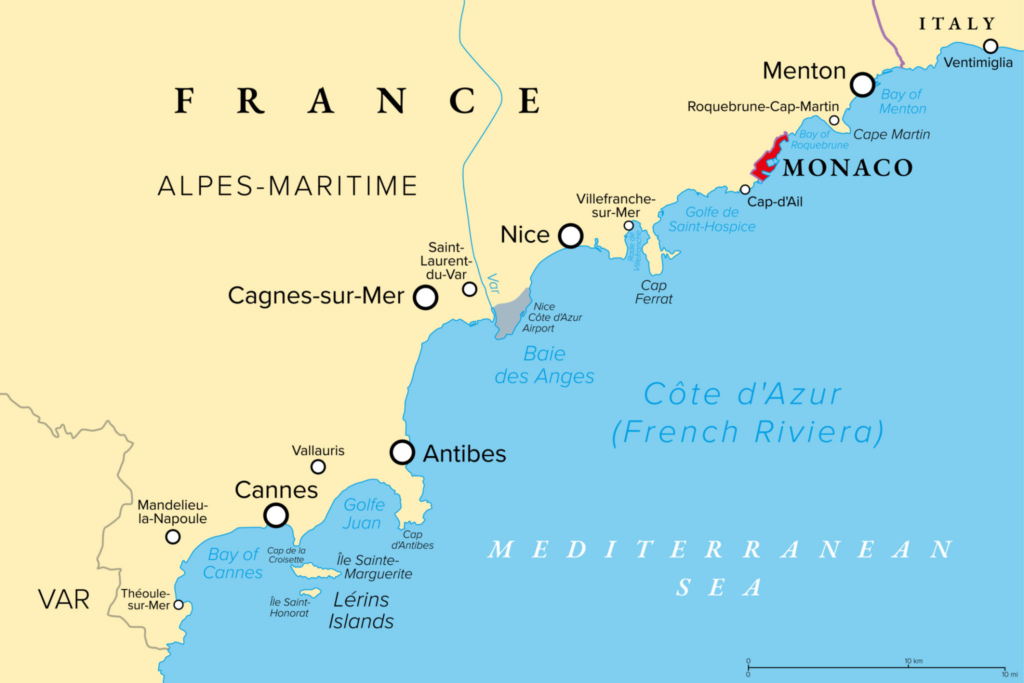
Behind the yachts and designer boutiques, you’ll find medieval villages clinging to cliffs, quiet beaches hidden below coastal paths, and towns where daily life still unfolds at café tables overlooking the sea. The Riviera is about contrast: elegance and simplicity, buzz and stillness, history and indulgence — sometimes all in the same afternoon.
These coastal destinations form the perfect introduction to the South of France.
1. Nice
Nice is often underestimated — usually seen as a transit point rather than a destination. That’s a mistake.
As the unofficial capital of the French Riviera, Nice blends urban energy, history, and seaside beauty better than almost anywhere else in the region. It’s one of the best bases in the South of France, especially if you don’t plan to rent a car immediately.
The heart of the city is Vieux Nice, a maze of narrow streets painted in warm shades of yellow and orange. This is where you’ll find bustling markets, tiny wine bars, and the kind of everyday charm that feels distinctly Mediterranean rather than flashy.
Then there’s the coastline.
The Promenade des Anglais stretches along the sea, offering wide views of the turquoise water and iconic blue chairs that invite you to sit, pause, and do absolutely nothing.

For the best perspective, climb Castle Hill. From the top, Nice reveals itself fully: red rooftops, curving bays, and the endless blue beyond.
Nice is ideal if you want:
- Easy transport connections
- Beach access without sacrificing culture
- A lively yet livable Riviera experience
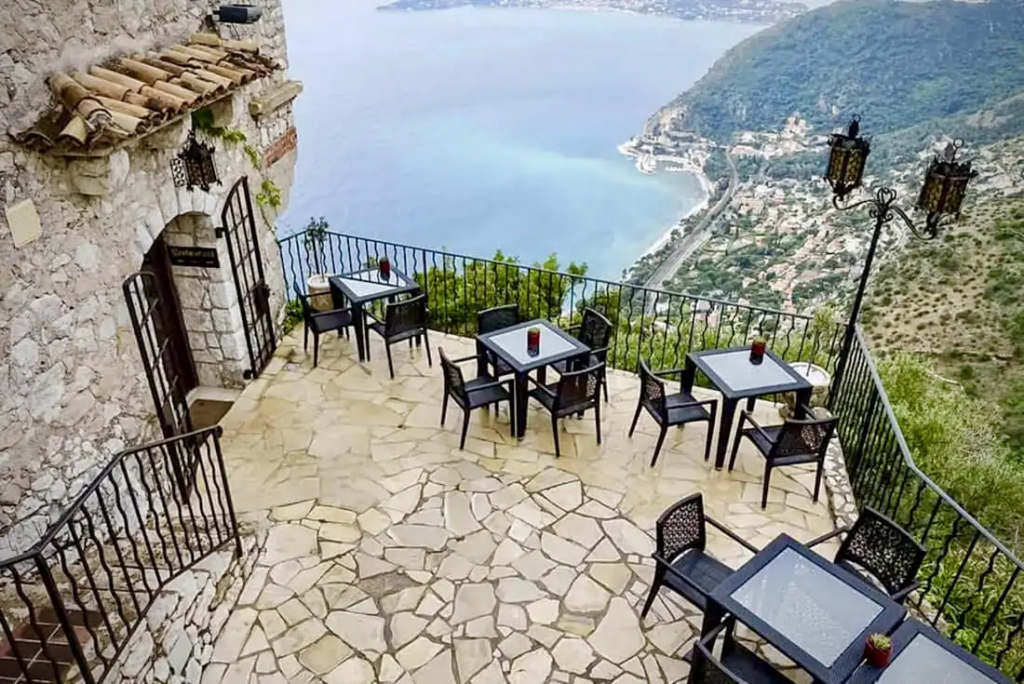
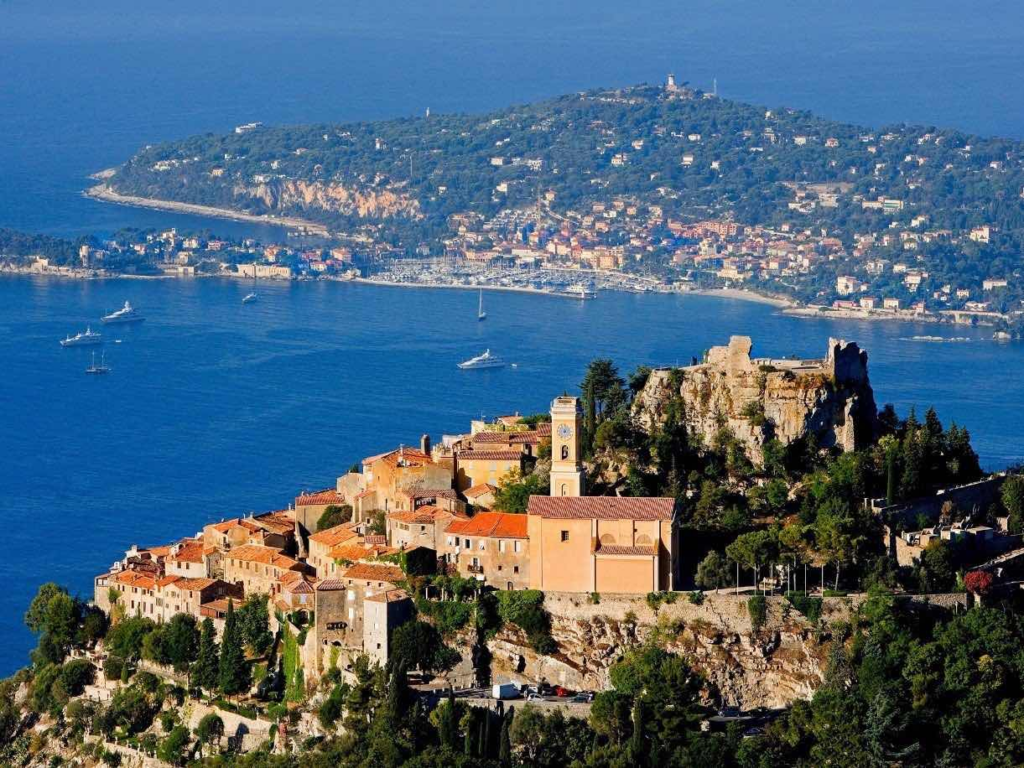
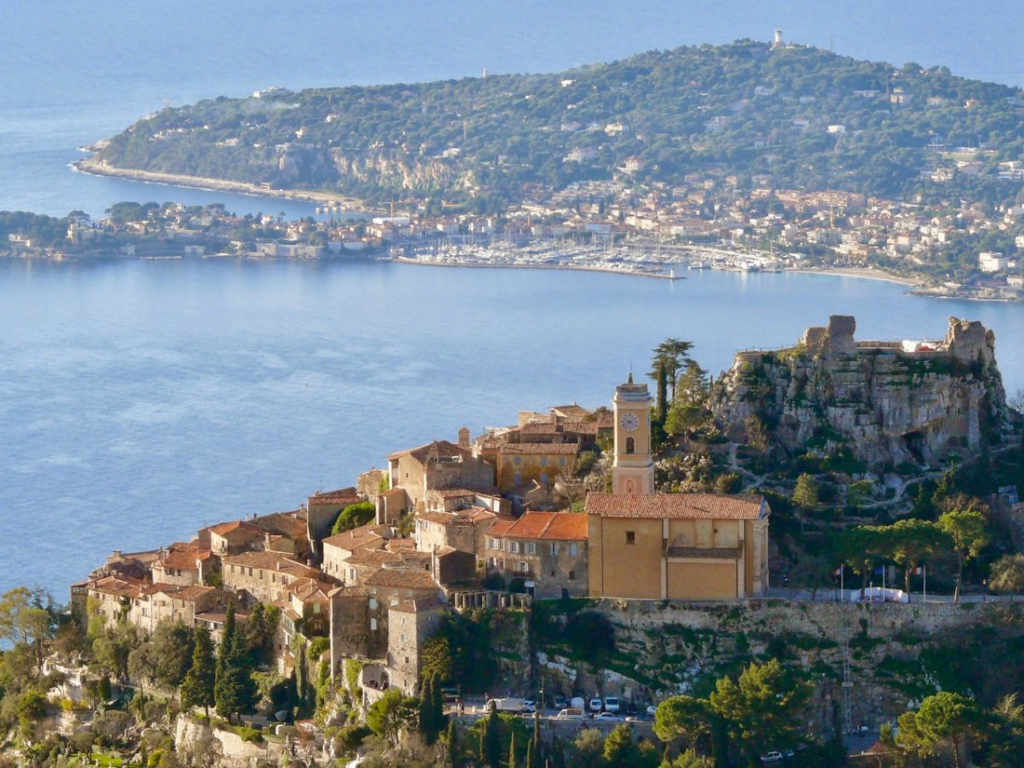
2. Èze
Èze doesn’t feel real the first time you see it.
Perched high above the Mediterranean, this medieval village appears almost suspended between the sky and the sea. Stone pathways wind upward through ancient walls, opening occasionally to views so dramatic they stop you mid-step.
Èze is small, but intensely atmospheric. Every corner feels cinematic — ivy-covered walls, arched doorways, artisan shops carved into stone. It’s the kind of place where you slow down without meaning to.
At the very top sits the exotic garden, offering one of the most breathtaking panoramic views on the entire Riviera. On clear days, you can see far along the coast, the sea stretching endlessly below.
Èze is perfect as a half-day stop, especially when combined with Nice or Monaco. Come early or late in the day to avoid crowds and experience its quieter, more magical side.

Best for:
- Romantic travelers
- Photographers
- Anyone craving a fairytale atmosphere
3. Monaco
Monaco is unlike anywhere else in the South of France — and that’s exactly why it’s worth visiting.
This tiny city-state is known for luxury, but beyond the supercars and casinos lies a place of unexpected beauty and fascinating contrasts. Ancient streets coexist with futuristic architecture, and quiet residential corners sit just minutes away from glittering harbors.
Walk up to Monaco-Ville, the old town perched above the sea. Here, you’ll find narrow streets, pastel buildings, and viewpoints that look out over the harbor far below. The atmosphere feels worlds away from Monte Carlo’s glamour.
Monaco works best as a short visit — a few hours is enough to understand its character. It’s not about lingering; it’s about experiencing something entirely different within the Riviera.
Visit Monaco if you’re curious about:
- A unique micro-state
- Architectural contrasts
- Riviera glamour in concentrated form
4. Menton
Menton feels softer than the rest of the Riviera.
Located near the Italian border, it carries a gentler rhythm, blending French elegance with Italian warmth. Pastel buildings cascade toward the sea, and citrus trees fill the air with a subtle, fresh scent.
The old town rises above the water in warm tones, connected by staircases and quiet lanes. From the top, the views stretch across the coastline toward Italy, especially beautiful in the late afternoon light.
Menton is ideal if you want:
- A slower, calmer coastal town
- Fewer crowds
- Authentic Riviera charm without excess
It’s a wonderful place to stay overnight, especially if you’re easing into or out of the region.
5. Antibes
Antibes sits at the crossroads of tradition and pleasure.
The old town is enclosed by ancient stone walls that once protected the coast. Inside, you’ll find narrow streets, local markets, and a distinctly lived-in feel — this isn’t a resort town pretending to be authentic. It simply is.
The harbor tells another story entirely: sleek yachts, reflections dancing on the water, and a sense of Riviera leisure that feels effortless rather than showy.
Antibes is perfect if you want:
- History without heaviness
- Beaches near a charming old town
- A balanced Riviera experience
It often surprises travelers — quietly becoming a favorite stop.
6. Cannes
Cannes is far more than a red carpet.
Yes, the film festival defines its image, but outside that moment, Cannes reveals a calmer, more approachable side. The old town of Le Suquet climbs gently above the city, offering winding streets, small restaurants, and views over the bay.
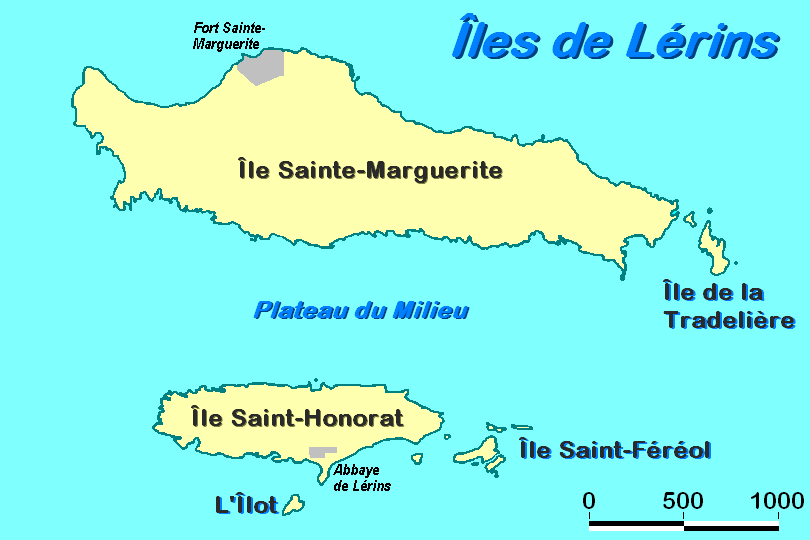
The nearby Îles de Lérins provide a peaceful escape just offshore — ideal for swimming, picnicking, and walking through pine forests with sea views.
Cannes works best when you:
- Look beyond the main boulevard
- Explore the old town
- Use it as a base for island trips
7. Saint-Tropez
Saint-Tropez is a legend — and also a contradiction.
It can be crowded, flashy, and overwhelming.
But it can also be surprisingly beautiful, especially early in the morning or outside peak summer.
The old harbor glows at sunrise, fishermen preparing boats as cafés slowly open. The historic quarter, La Ponche, reveals narrow streets and quiet corners that feel untouched by fame.
Saint-Tropez is worth visiting if you:
- Time it carefully
- Embrace contrast
- Want to see the Riviera myth up close
When approached gently, Saint-Tropez becomes less about status — and more about atmosphere.
Lavender Fields & Provençal Dreamscapes
Provence & the Luberon
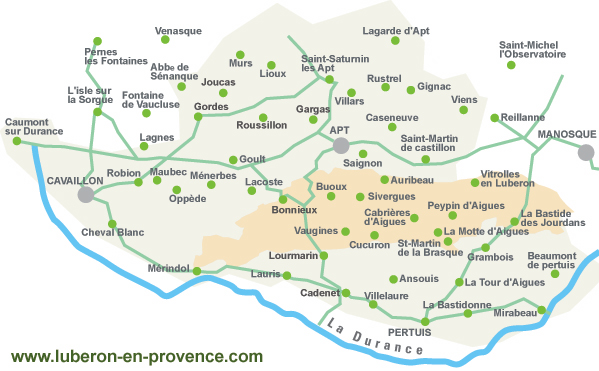
Provence is where the South of France slows down.
Here, days stretch longer, conversations last a little more, and the landscape feels intentionally composed — even though it’s entirely natural. Lavender fields ripple in the wind, stone villages glow golden in the afternoon sun, and the air carries the scent of herbs, dust, and warmth.
This is the South of France people dream about — often without realizing where those dreams come from.
8. Valensole Plateau
If you’ve ever seen a photo of endless lavender fields disappearing into the horizon, chances are it was taken in Valensole.
The Valensole Plateau is the most famous lavender region in Provence — and for good reason. Rolling hills are covered in perfectly aligned rows of lavender, broken occasionally by lone stone huts, sunflower fields, or distant mountains.
The magic happens in late June through mid-July, when the lavender is in full bloom. Early mornings and golden hour are the best times to visit, when the light softens the colors and the crowds thin out.
Valensole isn’t a village in the traditional sense — it’s a landscape experience. You come here to drive slowly, stop often, and let the scenery unfold.
Perfect for:
- First-time Provence visitors
- Photography-focused trips
- Short scenic detours paired with nearby towns

9. Sault
Sault offers a quieter, more grounded alternative to Valensole.
Perched at a higher altitude, this village is surrounded by lavender fields that bloom slightly later in the season — often extending into late July and early August. That makes Sault a favorite for travelers who miss peak lavender weeks elsewhere.
The village itself feels authentic and lived-in. Small bakeries, local restaurants, and weekly markets create a sense of daily life rather than tourism alone.
Sault is ideal if you:
- Want lavender without the biggest crowds
- Enjoy combining nature with village life
- Prefer a slower, less polished atmosphere
It’s also a great base if you’re exploring deeper into Provence.
10. Gordes
Gordes doesn’t need an introduction — it is the introduction.
Often described as one of the most beautiful villages in France, Gordes rises dramatically from the valley floor, its stone buildings stacked organically against the hillside. From a distance, it looks like a sculpture carved directly into the landscape.
Walk through the village and you’ll find:
- Steep cobbled streets
- Panoramic viewpoints
- Quiet courtyards hidden behind stone walls
Gordes can feel busy during the day, but early mornings and evenings restore its sense of calm. This is when the light turns golden and the village feels almost suspended in time.

Gordes is a must if you want:
- A classic Provence postcard moment
- One of the region’s most iconic views
- A dramatic hilltop village experience
11. Roussillon
Roussillon is Provence in warm tones.
Unlike the pale stone villages nearby, Roussillon is built from ochre-rich earth, giving it deep shades of red, orange, and gold. The result is a village that feels vibrant even under soft light.

One of its highlights is the Ochre Trail, a short walking path that winds through former pigment quarries. The contrast between blue sky, green trees, and fiery cliffs is unforgettable.
Roussillon feels artistic, expressive, and slightly unconventional — perfect if you’re drawn to color, texture, and atmosphere.
Best for:
- Creative travelers
- Photography lovers
- Anyone wanting a Provence village that feels different
Hilltop Villages & Timeless Beauty


The hilltop villages of Provence feel as if they were placed deliberately — not for convenience, but for beauty.
Built high above valleys and vineyards, these villages were once strategic strongholds. Today, they are places of calm, rhythm, and perspective. From their elevated viewpoints, you don’t just see the landscape — you understand it.
This part of the South of France isn’t about ticking off landmarks. It’s about wandering, pausing, and letting the hours slip by unnoticed.
12. Bonnieux
Bonnieux feels quietly powerful.
Unlike some of the more polished villages nearby, Bonnieux retains a sense of authenticity that’s immediately noticeable. Stone houses climb the hillside organically, connected by narrow streets that feel unchanged for generations.
At the top of the village, the view opens wide across the Luberon valley — vineyards, lavender fields, and distant hills forming a soft, layered horizon. It’s the kind of view that invites stillness rather than photos (though you’ll take those too).
Bonnieux is ideal if you’re looking for:
- A less touristy hilltop village
- Genuine local atmosphere
- Slow mornings and long evenings
It pairs beautifully with nearby villages and makes an excellent stop on a scenic drive through the region.
13. Lourmarin
Lourmarin feels alive.
Set at the foot of the Luberon hills, this village is known for its open, welcoming atmosphere and its elegant blend of history and modern life. A Renaissance château anchors the village, while cafés, galleries, and boutiques line the streets around it.
Unlike many hilltop villages, Lourmarin doesn’t feel perched or remote. It feels social. Markets spill into squares, conversations drift from table to table, and evenings stretch late under warm lights.
Lourmarin is perfect if you want:
- A lively yet refined Provence village
- Cultural events, markets, and cafés
- A base rather than just a quick stop
It’s a place where travelers often plan to stay for one night — and end up staying longer.
14. Ménerbes
Ménerbes rises slowly from the landscape, almost unnoticed — until you realize how commanding its position is.
This long, narrow hilltop village offers sweeping views in both directions, making it one of the most scenic locations in the Luberon. Stone houses line a single ridge, creating a sense of continuity and flow.
Ménerbes feels contemplative. Quieter than Lourmarin, less dramatic than Gordes, it’s the kind of place that rewards patience. Sit at a café, watch the light change, and let the silence speak.
Best for:
- Writers, thinkers, and slow travelers
- Scenic viewpoints without crowds
- A refined, understated Provence experience
✨ Why These Villages Matter
Together, Bonnieux, Lourmarin, and Ménerbes represent three sides of Provence:
- Authentic and grounded
- Social and cultured
- Quiet and reflective
You don’t need to visit them all — but visiting even one adds depth to any South of France itinerary.
Nature, Canyons & Outdoor Wonders


The South of France isn’t only refined villages and lavender fields.
It’s also wild.
In this part of the region, the landscape feels untamed and dramatic — carved by water, wind, and time. Cliffs plunge into impossibly blue water. Wetlands stretch toward the horizon. Silence replaces café chatter, and nature takes center stage.
These destinations are where you go to feel small in the best possible way.
15. Gorges du Verdon
Often called the Grand Canyon of Europe, the Gorges du Verdon is one of the most breathtaking natural landscapes in France.
This massive limestone canyon cuts deep through the earth, with sheer cliffs dropping into emerald-green water below. From above, the viewpoints are dizzying. From inside the canyon, the scale becomes almost overwhelming.
There are many ways to experience Verdon:
- Scenic drives along the rim with dramatic overlooks
- Kayaking or paddleboarding through the canyon
- Hiking trails that descend into the gorge itself
The contrast between the pale stone cliffs and the vivid water is unforgettable, especially in sunlight.
Verdon is ideal if you:
- Love outdoor adventure
- Want a dramatic break from villages and cities
- Enjoy nature that feels powerful rather than gentle
Plan at least half a day, though a full day is even better.
16. Calanques National Park
The Calanques feel almost unreal.
Stretching between Marseille and Cassis, this national park is defined by white limestone cliffs plunging into crystal-clear turquoise water. Narrow inlets hide small beaches, accessible only by hiking trails or boat.
Each calanque has its own character — some wide and dramatic, others intimate and quiet. The water here is among the clearest in the South of France, making it perfect for swimming, snorkeling, or simply floating in silence.
The Calanques are best experienced by:
- Hiking early in the morning
- Taking a boat trip from Cassis
- Visiting outside peak summer hours
This is nature at its most cinematic — raw, bright, and unforgettable.
17. Camargue
Camargue feels like another world.
Located in the Rhône delta, this vast wetland region is defined by wide-open spaces, salt flats, marshes, and endless skies. It’s home to wild white horses, black bulls, and flocks of pink flamingos — all roaming freely.
Unlike the rest of the South of France, Camargue isn’t about views from above. It’s about horizontality. About wind, water, and movement.
Drive through the region and you’ll pass:
- Salt pans glowing pink under the sun
- Remote beaches with few visitors
- Quiet villages shaped by tradition
Camargue is perfect if you want:
- Something completely different
- A sense of wildness and freedom
- Fewer crowds and more space
It’s an ideal stop for travelers who’ve already seen the classic Provence scenery and want to discover another side of the south.
History, Culture & Roman France
Occitanie & Roman France
Occitanie & Roman France
This part of the South of France feels grounded.
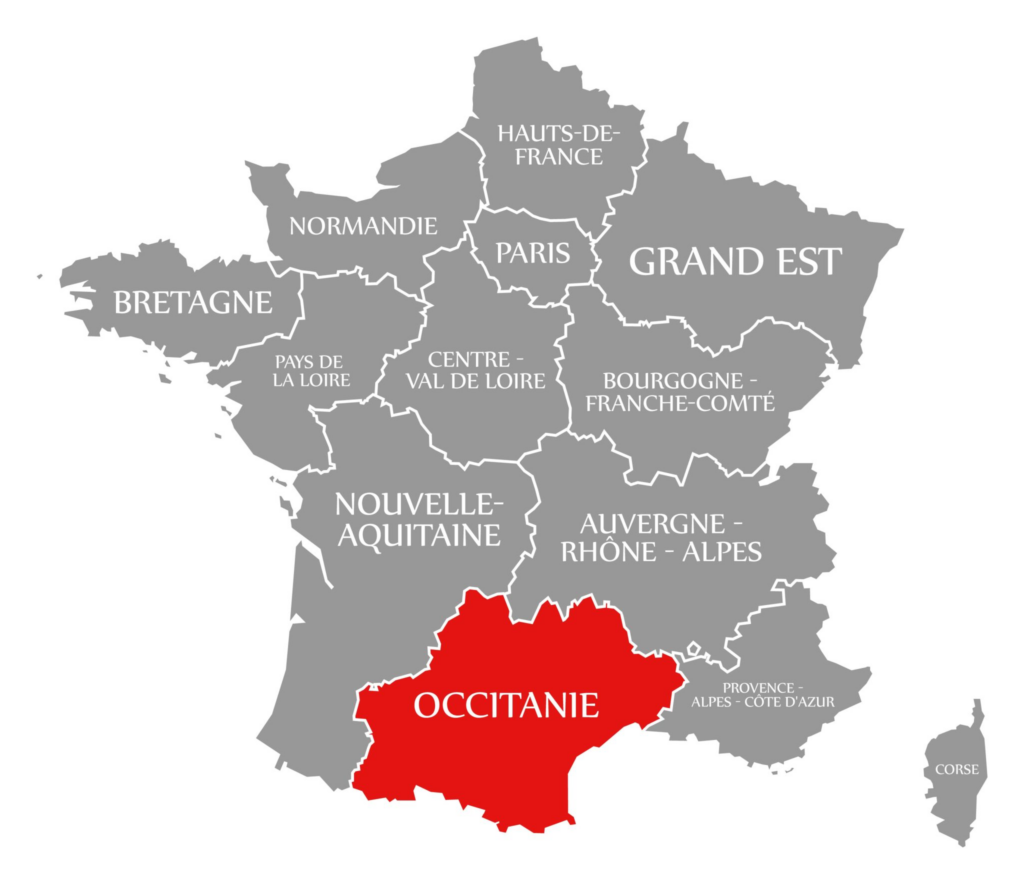
Here, beauty isn’t created to impress — it exists because it has endured. Stone by stone, century by century, these cities have carried their past forward, allowing history to remain visible, touchable, and deeply human.
18. Avignon
Avignon feels powerful the moment you arrive.
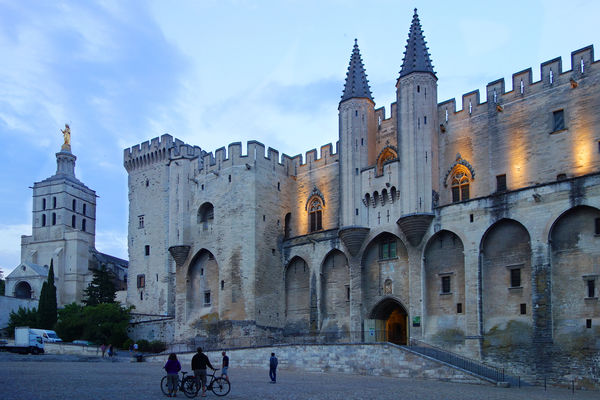
Encircled by medieval walls, the city carries an unmistakable sense of importance — not in a flashy way, but in a quiet, authoritative one. This was once the seat of the papacy, and that legacy still defines Avignon’s presence today.
At the heart of the city stands the Palais des Papes, one of the largest Gothic palaces in Europe. Its massive stone walls dominate the skyline, reminding visitors that Avignon was once at the center of European power. Walking through its courtyards and halls feels monumental, even without stepping inside.
But Avignon isn’t only about grandeur. Beyond the palace, the old town unfolds into lively streets filled with cafés, bookstores, and shaded squares. Life here feels active and cultural, especially during summer festivals when the city comes alive with theater and music.
Avignon is ideal if you want:
- A strong sense of history
- Walkable streets with character
- Culture woven naturally into daily life
It’s also one of the best bases for exploring the wider Provence region.

19. Nîmes
Nîmes feels Roman in a way few cities do.
This is not a place where ancient ruins hide quietly in corners — they stand confidently at the center of modern life. The Arena of Nîmes, remarkably well preserved, still hosts events today, blurring the line between past and present.
Just steps away, the Maison Carrée rises with perfect symmetry, one of the best-preserved Roman temples anywhere in the world. Its presence is so seamless that you might forget it’s over two thousand years old.
Beyond its monuments, Nîmes has a relaxed southern rhythm. Tree-lined boulevards, open squares, and a strong local identity give the city warmth and balance.
Nîmes is perfect for travelers who:
- Love ancient history presented clearly and accessibly
- Want a city that feels lived-in, not frozen
- Appreciate architectural continuity
It’s compact, elegant, and surprisingly approachable.
20. Arles
Arles feels layered — emotionally and visually.
Roman ruins rise between narrow streets. Sunlight reflects off pale stone walls. Art and history coexist effortlessly, without competing for attention.
The Roman amphitheater anchors the city, its presence both imposing and strangely intimate. Nearby, you’ll find cafés and quiet squares where daily life continues as it has for centuries.
Arles is also inseparable from Van Gogh, who found inspiration in its light, colors, and atmosphere. That artistic legacy still lingers, giving the city a reflective, slightly melancholic beauty.
This is a place to wander slowly. To notice textures. To sit without rushing.

Arles is ideal if you want:
- History with emotional depth
- A city that feels artistic rather than grand
- A quieter alternative to larger destinations
It often becomes one of the most memorable stops — not because it demands attention, but because it rewards it.
Underrated & Magical Stops
Natural Wonders & Wild Landscapes

Not every unforgettable place announces itself loudly.
Some destinations reveal their magic slowly — through atmosphere, rhythm, and the way they make you feel rather than what they show you immediately. These towns don’t compete for attention, yet they often stay with travelers long after the trip ends.
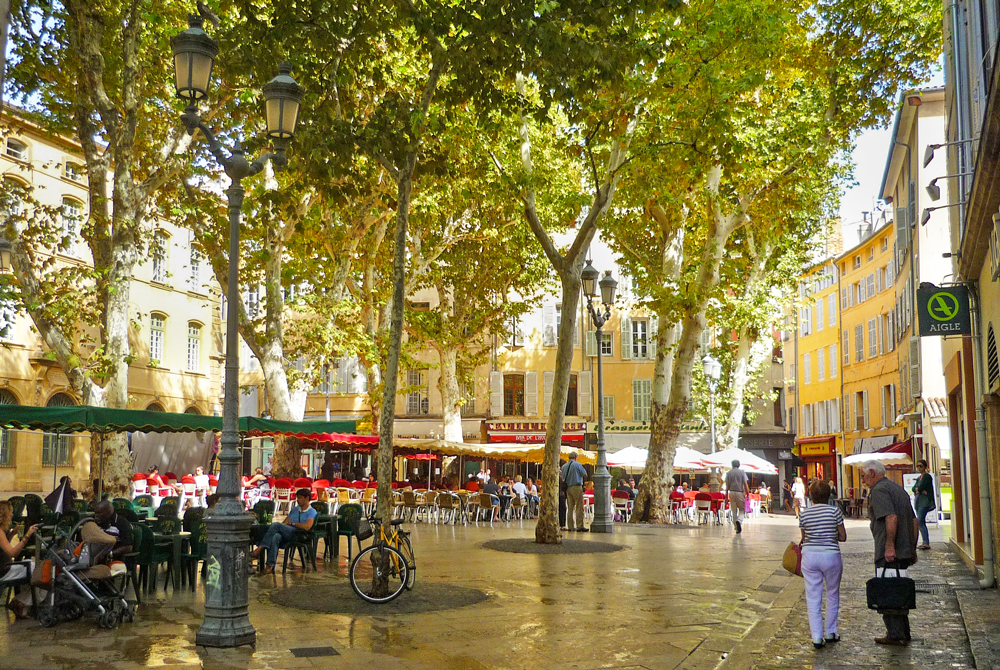
21. Aix-en-Provence
Aix-en-Provence feels refined without trying.
Elegant streets radiate from leafy boulevards, fountains murmur quietly in shaded squares, and the city carries an effortless sense of balance. This is a place shaped by art, philosophy, and daily rituals — not spectacle.
The historic center is perfect for wandering. Narrow lanes open into lively plazas, where cafés fill with conversation and time seems to slow naturally. Aix is also deeply connected to Cézanne, whose influence still shapes the city’s artistic identity.
Aix-en-Provence is ideal if you want:
- A cultured, walkable city
- Market mornings and café afternoons
- A sophisticated but relaxed atmosphere
It works beautifully as both a base and a destination in its own right.
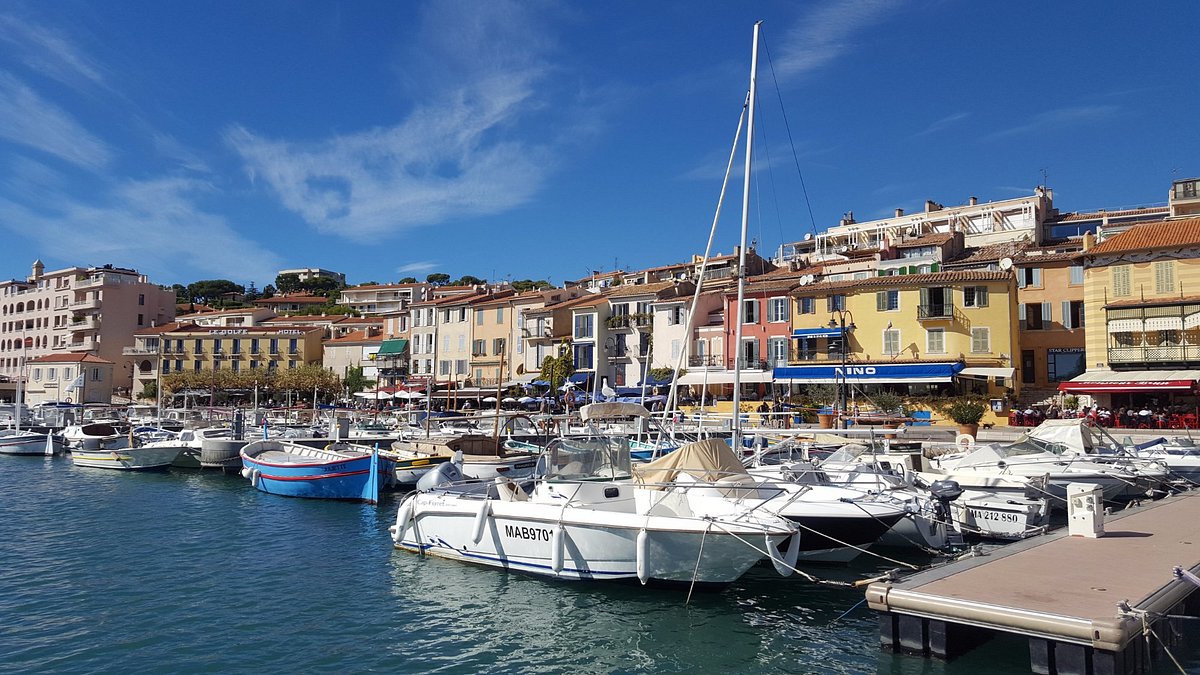
22. Cassis
Cassis feels intimate and bright.
Set between dramatic cliffs and calm turquoise water, this small harbor town offers one of the most picturesque coastal settings in the South of France. The port is lined with pastel buildings, cafés spilling onto the quay, and boats gently rocking in the sun.
Cassis is also the gateway to the Calanques, making it an ideal base for combining seaside charm with outdoor exploration. Early mornings are especially magical, when the town is quiet and the light softens the colors.
Cassis is perfect if you’re looking for:
- A small, charming seaside town
- Easy access to nature and swimming
- A relaxed but lively coastal vibe
It’s the kind of place where a single afternoon easily turns into an overnight stay.
23. Saint-Rémy-de-Provence
Saint-Rémy-de-Provence feels gentle.
Surrounded by olive groves and low hills, this town has a calm, nurturing energy that’s immediately noticeable. Its historic center is compact and walkable, filled with small shops, galleries, and cafés shaded by plane trees.
Saint-Rémy is closely associated with Van Gogh, who spent time here during one of the most intense periods of his life. That emotional history adds depth, but the town never feels heavy — instead, it feels thoughtful and serene.
This is a place for:
- Slow mornings and quiet evenings
- Travelers seeking calm rather than crowds
- Ending a Provence journey on a reflective note
Saint-Rémy doesn’t overwhelm. It comforts.
Suggested South of France Itineraries (7, 10 & 14 Days)
One of the most common mistakes when planning a South of France trip is trying to see everything.
The truth is simple:
the South of France rewards focus, not speed.
Below are three realistic itineraries that balance travel time, atmosphere, and variety — without turning your vacation into a checklist.
🕖 7-Day South of France Itinerary (First-Time Highlights)
Best for: first-time visitors, limited time, relaxed pace
Base regions: French Riviera or Provence (not both)
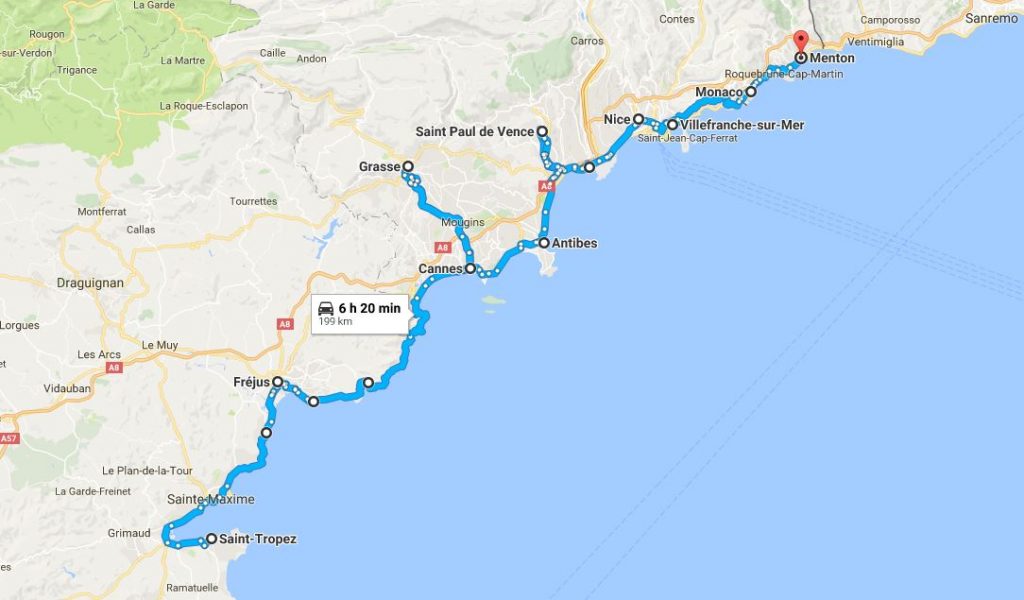
Option A – French Riviera Focus
- Day 1–2: Nice
- Day 3: Èze + Monaco
- Day 4: Menton
- Day 5: Antibes
- Day 6: Cannes + Îles de Lérins
- Day 7: Saint-Tropez (early morning or off-season)
Option B – Provence Focus
- Day 1: Avignon
- Day 2: Gordes
- Day 3: Roussillon
- Day 4: Bonnieux & Ménerbes
- Day 5: Lourmarin
- Day 6: Saint-Rémy-de-Provence
- Day 7: Aix-en-Provence
💡 Tip: If you only have one week, resist combining coast + countryside. Depth beats distance.
🕙 10-Day South of France Itinerary (Coast + Provence)
Best for: balanced travel, variety, photographers
- Day 1–2: Nice
- Day 3: Èze + Monaco
- Day 4: Menton
- Day 5: Antibes or Cannes
- Day 6: Travel to Provence (Avignon base)
- Day 7: Gordes + Roussillon
- Day 8: Valensole or Sault (lavender season)
- Day 9: Saint-Rémy-de-Provence
- Day 10: Aix-en-Provence
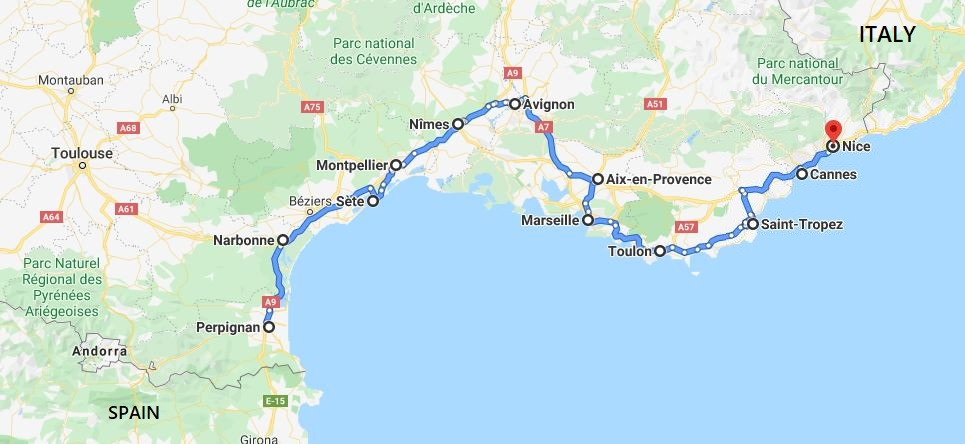
This route blends:
- Riviera light and color
- Provençal calm
- Minimal backtracking
🕯️ 14-Day Slow Travel Itinerary (The Full Experience)
Best for: slow travelers, repeat visitors, creative souls
French Riviera
- Nice (2 days)
- Èze + Monaco (1 day)
- Menton (1 day)
- Antibes (1 day)
- Cannes + islands (1 day)
Provence & Nature
- Avignon (1 day)
- Gordes + Roussillon (1 day)
- Bonnieux, Lourmarin, Ménerbes (1–2 days)
- Valensole or Sault (1 day)
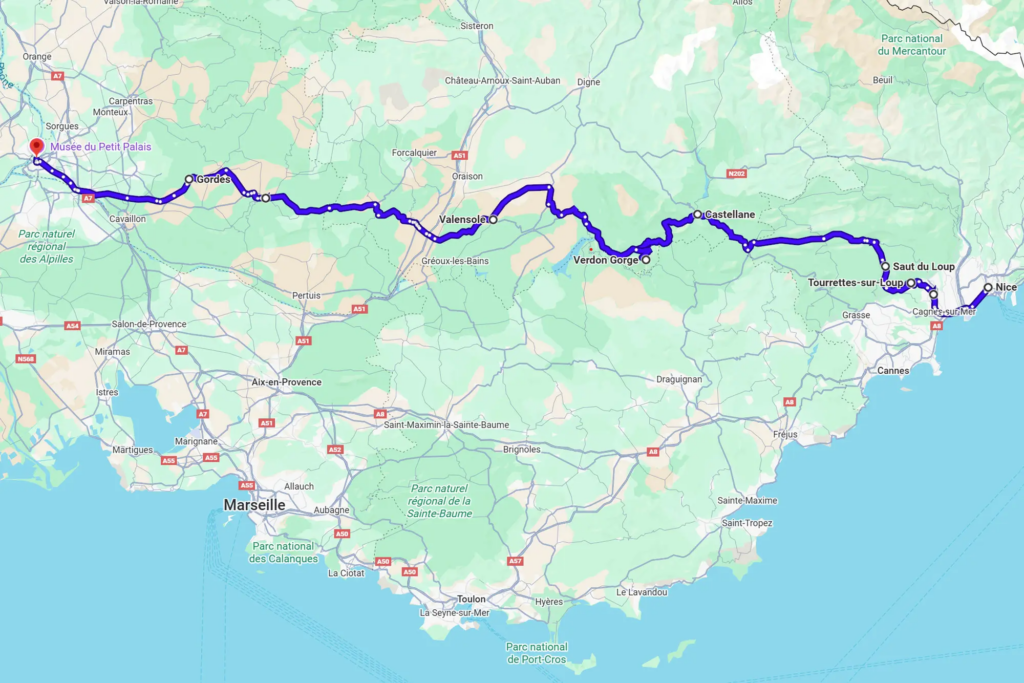
- Gorges du Verdon (1 day)
- Saint-Rémy-de-Provence (1 day)
Final Stop
- Camargue (1 day)
- Arles (1 day)
This itinerary leaves room for:
- Markets
- Detours
- Weather changes
- Mood-based decisions
Which is exactly how the South of France should be experienced.
🌤️ Best Time to Visit the South of France
April–May
- Mild weather
- Fewer crowds
- Ideal for cities and villages
June–mid July
- Lavender season
- Long days
- Rising crowds
Late July–August
- Hottest months
- Coastal focus recommended
- Book everything early
September–October
- Warm sea
- Fewer tourists
- Golden light
(arguably the best time overall)
Winter
- Quiet, atmospheric
- Great for cities
- Limited countryside activity
✈️ Practical Travel Tips for the South of France
- Rent a car for Provence, lavender fields, and nature areas
- Use trains for Nice, Cannes, Avignon, and major cities
- Stay central, not remote — driving at night can be slow
- Plan less than you think you need
- Eat late and walk more — it’s part of the rhythm
Photography tip:
Early mornings and golden hour completely transform villages and coastlines.
🌅 Why the South of France Feels Like a Dream
The South of France doesn’t impress you all at once.
It stays with you.
In the way light falls on stone walls.
In the silence between church bells.
In the taste of wine after a long day of wandering.
It’s not about seeing everything.
It’s about feeling enough.
Whether you come for the coast, the countryside, or the quiet moments in between, the South of France has a way of adjusting to you — not the other way around.
And that’s what makes it unforgettable.